
A corporate brochure is often one of the first resources potential customers, investors, partners or other stakeholders use to understand a business.
Traditionally, brochures have been designed as printed documents containing company information, products, services, capabilities and contact details. But as business communication becomes increasingly digital, corporate brochures are evolving too.
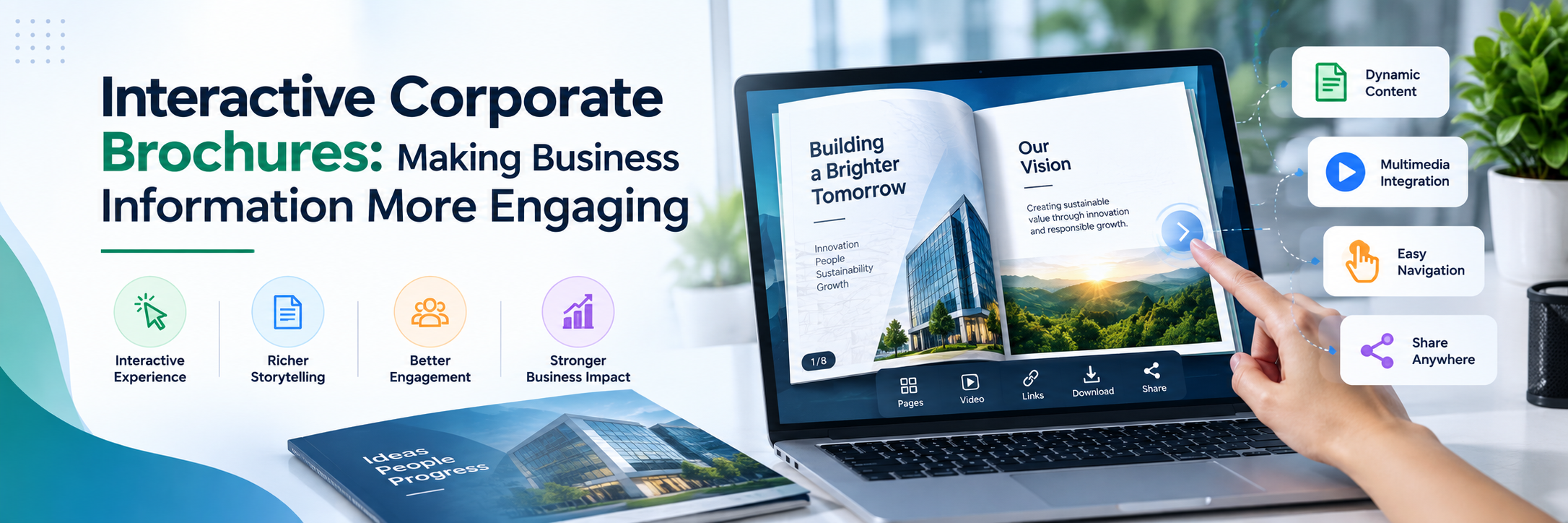
Interactive corporate brochures combine traditional corporate information with digital elements such as clickable links, videos, animations, galleries, navigation features and interactive content.
Instead of simply reading about a business, audiences can explore it.
Here are some ways interactive corporate brochures can make business information more engaging and effective.
1. Make Important Information Easier to Explore
A traditional brochure often requires readers to move through pages one by one.
An interactive brochure can make navigation much easier.
Include features such as:
- Clickable contents
- Internal page links
- Interactive menus
- Section buttons
- Downloadable resources
- Direct links to relevant webpages
This allows readers to move directly to the information that matters to them.
A potential customer looking for your products should not have to search through every page to find them.
2. Bring Your Brand Story to Life
Corporate brochures contain important information, but too much text can make the experience feel static.
Interactive elements can help turn company information into a more engaging story.
You can include:
- Brand videos
- Company introduction films
- Leadership messages
- Factory or facility tours
- Product demonstrations
- Project highlights
Visual storytelling can help audiences understand your organisation more quickly while making important information more memorable.
3. Showcase Products and Services More Effectively
A product image and paragraph of text may not always be enough to explain what your business offers.
Interactive brochures can provide additional ways to present products and services.
For example, you can include:
- Product galleries
- Product videos
- Technical specifications
- Downloadable brochures
- Interactive diagrams
- Product webpages
This allows readers to explore products at their own pace and access more detailed information when required.
4. Make Complex Information Easier to Understand
Businesses often need to communicate complex products, processes, technologies or capabilities.
Large blocks of technical information can make this difficult.
Interactive content can simplify the experience through:
- Infographics
- Animated diagrams
- Process illustrations
- Charts
- Interactive timelines
- Visual comparisons
Instead of explaining everything through paragraphs, businesses can use visual content to help audiences understand information faster.
The goal is not to include more information. It is to present important information more effectively.
5. Create a More Engaging Digital Experience
A digital brochure does not have to behave like a static PDF.
Interactive design can introduce movement and engagement through:
- Image galleries
- Embedded videos
- Animated elements
- Clickable graphics
- Interactive navigation
- Expandable sections
These features can make the brochure feel more like a digital experience than a traditional document.
However, interaction should always have a purpose. Too many animations or effects can distract from the actual message.
6. Make It Easier to Connect With Your Business
A corporate brochure should not only explain what your company does. It should also make it easy for interested audiences to take the next step.
Interactive brochures can include direct actions such as:
- Contact Us
- Request a Quote
- Visit Our Website
- Download Product Information
- Send an Email
- Call Our Team
- Follow Our Social Channels
A reader can move from learning about your business to contacting you without leaving the digital experience.
7. Build Greater Credibility
A well-designed interactive brochure can create a more modern and professional impression.
It can bring together:
- Company information
- Certifications
- Awards
- Client work
- Case studies
- Manufacturing capabilities
- Videos
- Testimonials
- Leadership information
When these elements are presented clearly and consistently, the brochure can become a stronger representation of your organisation.
Professional design does not replace credibility, but it can help communicate it more effectively.
8. Make Corporate Brochures More Flexible
One advantage of digital brochures is that they can support different audiences and information requirements.
A corporate brochure can provide different routes for:
- Customers
- Investors
- Partners
- Employees
- Job candidates
- Media
- Other stakeholders
For example, a customer may want to explore products, while an investor may want to understand business capabilities and growth areas.
Interactive navigation can help each audience find the information most relevant to them.
9. Connect the Brochure With Your Digital Ecosystem
Your corporate brochure should not exist in isolation.
It can become a gateway to other digital platforms.
Connect it to:
- Your corporate website
- Product pages
- Social media
- Videos
- Case studies
- Contact forms
- Download centres
- Online resources
This creates a connected experience between your corporate communication and wider digital presence.
Instead of ending with the last page, the brochure can encourage audiences to continue exploring your brand online.
10. Track and Improve the Experience
Digital communication can provide insights that traditional printed brochures cannot.
Depending on the platform used, businesses may be able to understand how audiences interact with their content.
You can evaluate areas such as:
- Most viewed sections
- Link clicks
- Video engagement
- Download activity
- Time spent
- Most popular content
These insights can help businesses understand what information audiences find most useful.
Over time, this can help improve both the brochure and the wider communication strategy.
A Better Approach to Interactive Corporate Brochures
An interactive brochure should not simply be a traditional PDF with buttons added to it.
It should be planned around the audience, content and business objective.
A strong interactive brochure combines:
Clear information + strong design + visual storytelling + intuitive navigation + meaningful interaction + clear calls to action
Start by identifying what your audience needs to know.
Then organise the information into a clear structure and use interactive elements where they genuinely improve understanding or engagement.
The objective is not to make every element interactive.
It is to make important business information easier to explore, understand and remember.
Final Thoughts
Corporate brochures continue to play an important role in business communication, but the way audiences consume information is changing.
Interactive brochures can help businesses move beyond static company profiles and create more engaging digital experiences that combine information, visual storytelling and direct interaction.
When designed well, they can help businesses explain their capabilities, showcase their offerings, strengthen brand perception and make it easier for audiences to take the next step.
For businesses looking to transform corporate information into engaging digital experiences, Vizcom combines content, design, visual storytelling and digital technology to create corporate communication assets that are built around both brand objectives and audience needs.